Your operation requires regular sanitation protocols tailored to specific risks, daily throughput, food allergens, and inspection schedules, with verifiable documentation validating HACCP requirements, compliance audits, and public health regulations. The information following provide details about essential cleaning protocols.
Main Points
- Brampton's food safety cleaning professionals clean for restaurants, grocery departments, commissaries, warehouses, bakeries, schools, mobile vendors, and allergen-sensitive operations.
- Compartmentalized approaches treat frequently contacted areas, food-contact equipment, kitchens, floors, drains, restrooms, and storage areas for avoiding cross-contamination.
- Documentation of finishing through samples, inspections, and action records ensures qualified specialists have verified proper chemical concentration, appropriateness, and exposure duration.
- Everyday, recurring, and cyclical operations designated by area constitute hygiene calendars based on threat, production rate, format changes, spills, and regulations.
- Emphasize suppliers showing HACCP, health regulatory expertise, safety training training, coverage, endorsements, color-coded implements, and compliance-ready cleaning paperwork.
Food Safety Cleaning Requirements for Brampton Establishments
Any Brampton facility that manages, stores, prepares, packages, or serves food needs sanitation protocols. You must follow it if your establishment falls under health department oversight, food regulations, or HACCP requirements. That requirement covers eateries, dining facilities, food distribution centers, supermarket departments, meat markets, fish counters, corner stores, and commercial kitchens.
You also need proper hygiene cleaning in storage facilities, food production centers, refrigerated locations, bakery retailers, school meal programs, event venues, and food distribution hubs. Temporary and mobile establishments count too, including catering trucks, festival vendors, and pop-up food booths. If your staff handle ingredients, section prepared foods, heat finished items, or keep allergens stored, your facility needs established sanitation documentation. In Brampton, food safety isn't optional; it's part of statutory, business, and public health compliance.
What Do Brampton Cleaning Professionals Handle?
Your facility requires professional cleaners who sanitize all high-touch areas, kitchens, all floor types, and restrooms for food safety and health code adherence. These specific areas are emphasized due to their elevated cross-contamination potential, trip and slip dangers, and violations of hygiene standards.
Understanding their cleaning procedures allows you to confirm your operation's sanitation satisfies operational demands and regulatory compliance.
Key High-Touch Surface Sanitizing
implement a sanitizing frequency
testing surfaces to check sterilization success
Kitchens, Floors, and Restrooms
Professional cleaners in Brampton prioritize kitchens, floors, and restrooms given that each location involves distinct contamination control, slip-and-fall, and health code requirements. In industrial kitchens, you need grease removal from cooking stations, appliance surfaces, drain systems, preparation areas, and backsplashes to minimize contamination and pest pressure.
You should also expect documented floor care. is likewise provided as part of the service.
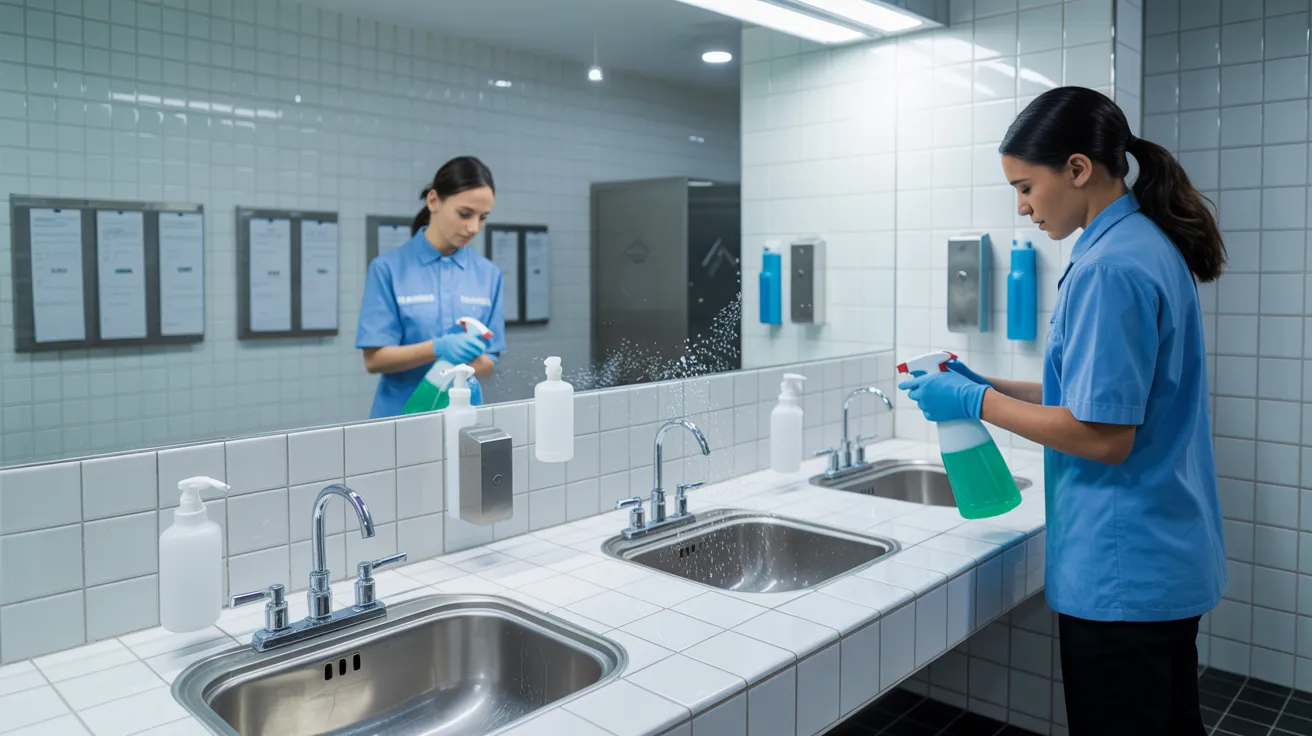
In restrooms, cleaners disinfect touchpoints, fixtures, partitions, dispensers, and waste containers then restock supplies and control odours. They also service restaurant moprooms, where chemical storage, sink hygiene, and drainage conditions can affect sanitation compliance and staff safety daily.
The Importance of Food Safety Cleaning in Brampton
To adhere to health code requirements and pass inspections, Brampton establishments must follow appropriate cleaning protocols. You also minimize bacterial spread through proper cleaning of food-preparation surfaces, appliances, and frequently-touched items. Most importantly, you help protect public health by lowering the risk of foodborne illness in your facility.
Health Code Compliance
Since Brampton food operations must follow rigorous sanitary regulations, your food safety cleaning directly affects your capacity to satisfy health codes, protect diners, and eliminate regulatory penalties. You must maintain sanitary food-contact surfaces, documented cleaning schedules, safe chemical management, and verifiable staff procedures that align with municipal and provincial inspection expectations.
Strong cleaning records assist you in proving due diligence during compliance reviews and proving your procedures follow uniform patterns that are reproducible and documented.
Contamination Control
Meeting regulatory requirements also depends on your ability to prevent cross-contamination during routine food preparation and sanitation. You must keep raw items away from prepared dishes, sanitize prep surfaces between tasks, and store chemicals away from food-contact items. Established guidelines minimize contamination chances and ensure ongoing adherence to health checks.
You should implement allergen segregation to prevent major allergens from touching common work areas, storage bins, or tools. Use dedicated cutting boards, color-coded tools, and strict utensil labeling so staff don't mix items throughout cooking or serving. Require handwashing after handling raw meat, seafood, eggs, or allergen-containing products. Replace wiping cloths regularly, and verify sanitizer strength with test strips. When staff members receive training on these procedures each work period, you create a cleaner, safer operation that satisfies Brampton's safety standards daily.
Community Health Assurance
When sanitation protocols fails, you don't just risk a failed inspection—you heighten the likelihood of food-related sickness affecting customers, staff, and the wider Brampton community. You also undermine your responsibility in protecting public health, especially in busy food facilities where pathogens travel quickly through surfaces, equipment, and touchpoints.
You depend on sanitation protocols that eliminate contaminants, properly disinfect, and verify results. This involves maintaining exposure times, deploying approved disinfectants, recording schedules, and training employees to fulfill compliance standards. These actions support disease prevention by reducing microbes before affecting food surfaces or hands. In Brampton, robust sanitation shields vulnerable populations, minimizes disease spread, and demonstrates accountability. When you maintain standards, you go beyond regulations—you meaningfully lower danger and advance safer food handling throughout the city.
Why Is Cleaning Essential for Food Safety Compliance?
Adopting rigorous cleaning routines secures food safety compliance by decreasing contamination threats, limiting pathogen development, and keeping your facility aligned with sanitation requirements under HACCP-based programs and public health regulations. You validate that product-contact areas are visibly clean and microbiologically controlled, supporting documented preventive controls and inspection readiness.
Cleaning efforts additionally upgrade allergen control by eliminating residues that can cause undeclared allergen exposure.
When Do You Arrange Commercial Cleaning?
Elevate cleaning rate during high-volume production, product changeovers, spillage occurrences, and following maintenance work.
Drains, vents, storage racks, and hard-to-reach equipment zones need every week or every month cleaning, guided by inspection data and sanitation logs.
What Should You Look For in Brampton Cleaning Experts?
Screen providers initially by their food hygiene standards—not budget alone. You need to confirm that every company meets CFIA, public health, and HACCP-aligned expectations for your operation. Demand insurance verification, WHMIS compliance, training records, and management systems. Evaluate technician understanding of cross-contamination risks, chemical safety, and documented sanitation practices.
You should also assess operational reliability and accountability. Request references from food facilities in Brampton, then examine response times, corrective-action procedures, and communication standards. Confirm the company participates in supplier audits and can present audit-ready records when regulators or third parties request evidence. Check whether equipment maintenance is performed, color-coded implements are used appropriately, and facility-specific risks are recognized. A competent service protects regulatory adherence, product integrity, and your brand reputation.
What's covered in a sanitation cleaning strategy?
Create a documented strategy that defines every sanitation duty, guideline, and expectation prior to beginning production. You should document cleaning frequencies, approved chemicals, dilution rates, contact times, tools, and verification methods for each zone, surface, and piece of equipment. Be sure to include pre-operational inspections, corrective actions, and employee training requirements.
Your plan should also address cross-contamination controls, waste handling, pest-prevention measures, and documented schedules for restrooms, drains, floors, and food-contact areas. Explain how you'll keep raw and prepared foods apart, support ingredient tracking, and ensure accurate allergen labeling through validated cleaning between product changes. You should assign accountability, maintain signed records, and compare results against regulatory standards, HACCP controls, and customer requirements. When gaps appear, revise procedures immediately and retrain staff.
Commonly Requested Inquiries
Will cleaning services handle overnight shifts at Brampton properties?
Yes, you can arrange see the details sanitation coverage to support nighttime operations in Brampton facilities. You'll organize overnight sanitation around operational windows, access controls, and staffing requirements. Providers typically establish overnight logistics to reduce disruption, maintain standards, and record finished work. You should confirm arrival timeframes, supervision, access protocols, and waste handling before beginning service. If you operate regulated spaces, you'll also want cleaning records that support inspections and internal quality assurance.
Do Brampton cleaning experts offer emergency spill response solutions?
Yes, you can find Brampton cleaning experts to provide hazard containment solutions. They handle hazard containment, assess risks, isolate affected areas, and start rapid decontamination to reduce exposure and operational disruption. You should verify arrival timeframes, professional credentials, safety procedures, and waste management. If your facility must comply with industry standards, select a service that documents incidents, maintains regulatory procedures, and supports audit readiness.
Can environmentally safe disinfectants be utilized safely on food-contact surfaces?
Yes, plant-based sanitizers can be secure for surfaces contacting food if you choose solutions certified for food use and regulatory compliant. You should verify exposure duration, dilution ratios, and rinse requirements before application. Many natural-based solutions reduce harsh chemical exposure, but you must obtain demonstration of efficacy against target microorganisms. To keep surfaces residue-free, you need to follow precise manufacturer instructions and verify the cleaning agent adheres to food sanitation requirements.
Can maintenance plans be tailored for seasonal production changes?
Without question, cleaning schedules customize readily for seasonal variations. Adjust intervals, staffing, chemicals, and validation steps to correspond to seasonal workflows while upholding compliance standards. Minimize equipment downtime by planning cleaning during line changes, peak seasons, and operational patterns. Further modify SSOPs, instruction programs, and monitoring protocols to account for transient threats, additional allergens, or higher contamination levels. Periodic assessments ensure your plan functional.
Will professional cleaning services teach employees on hygiene best practices?
Yes, commercial cleaners typically educate your staff on sanitation best practices. You get employee instruction on correct chemical application, exposure periods, contamination control, machine breakdown, and record keeping. They generally follow training with HACCP, GMP, and CFIA or regional health department regulations. Many also conduct hygiene inspections to verify compliance, spot deficiencies, and reinforce corrective actions. This allows you to maintain consistent procedures, pass inspections, and minimize contamination hazards regularly.
Conclusion
By collaborating with Brampton food safety and commercial cleaning experts, you aren't just organizing—you keep your operation inspection-ready and your standards in compliance. From kitchens to processing floors, every sanitized surface and organized space reduces pest risk and avoids expensive losses. By scheduling cleanings at appropriate intervals and adhering to a systematic cleaning protocol, you protect staff members, customers, and your credibility. In a heavily controlled environment, clean spaces must be prioritized—they're essential to successful operations.